Where to begin in a library of sacred texts
Three short reading paths, with attention to genre, source translation and the difference between a passage and a whole tradition.
Choose one text and one small question. A broad library becomes useful when it gives you a manageable way to start, not when it asks you to absorb a tradition in an afternoon.
Path one: how a community learns to live
Open the Didache. Its two ways set a practical contrast before the later instructions about communal life. Ask what actions the text directs, who is being addressed, and where its language overlaps with scriptural teaching. Then visit the Christian collection to see how a manual differs from a letter or a theological argument.
Path two: work, time and the generations
Read Ecclesiastes 1:3-4. Put its question about labour beside its picture of generations passing. Resist turning two verses into a complete statement of Jewish or Christian belief. Return to the rest of the chapter in the linked source, then ask how the larger work develops or complicates the opening.
Path three: a difficult person and a philosophical response
Read Meditations 2.1. Identify the difficult people Marcus expects, then follow his reasoning about what connects him to them. Compare the historical English with a named modern translation or a clearly labelled adaptation. A smoother sentence is not evidence that every interpretive problem has disappeared.
Four questions to carry between shelves
- What kind of text is this, and what is it trying to do?
- Which source or translation am I reading?
- Is this excerpt representative, or is it one stage in a larger argument?
- What do the surviving witnesses let us know, and what remains uncertain?
Our source policy explains how the library labels excerpts. Related books help you continue when you want a supported reading edition in print or ebook form; they do not unlock otherwise hidden introductions.
The Clear Text Editions bookshelf
Reading companions for these paths
The complete work, with the context to understand it. Explore the sources, see the differences, find your next book.
Christian texts
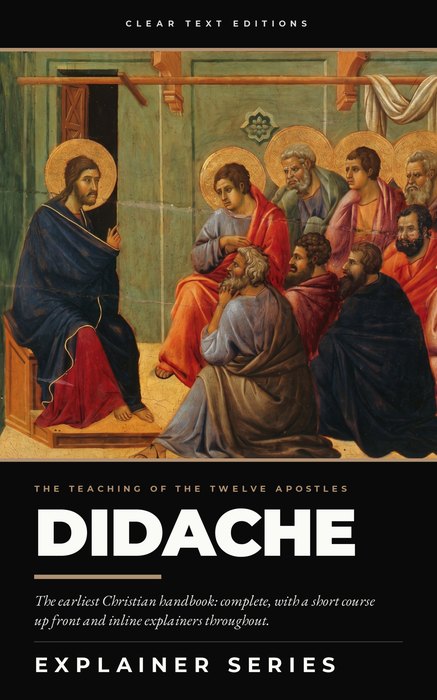
The Didache
- The complete Didache in clear modern English, with its teaching and worship instructions.
- A short introductory course explains the setting before you begin.
- Labelled inline explainers sit beside the passages that need them.
Classical philosophy
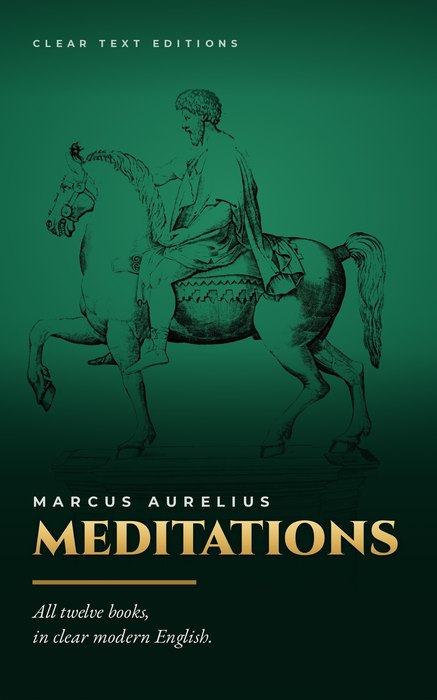
Meditations
- All twelve books, with the standard book and section numbering.
- A modern rendering of George Long's 1862 translation, with its source and limits stated.
- A primer, three diagrams, per-book concept pages and historical engravings.
Jewish literature and reception
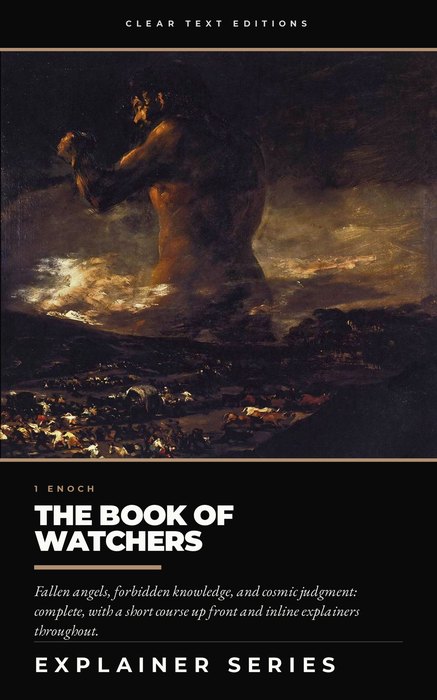
The Book of Watchers
- The Book of Watchers, 1 Enoch 1–36, in clear modern English.
- A short introductory course explains the setting before you begin.
- Labelled inline explainers sit beside the passages that need them.
Questions and answers
What is a good first sacred text to read?
Choose a short, contextualized work or passage that matches your interest, such as a practical manual, a wisdom text or a philosophical reflection, rather than assuming one text represents every tradition.
Do I need background before reading a sacred text?
A brief introduction to genre, historical setting and the source translation helps prevent mistakes without replacing the experience of reading the text itself.
Read next
Sources: J. B. Lightfoot, The Apostolic Fathers, Didache 1; https://ccel.org/ccel/lightfoot/fathers/fathers.ii.xii.html; World English Bible Classic, Ecclesiastes 1:3-4; https://ebible.org/eng-web/ECC01.htm; Marcus Aurelius, Meditations 2.1, George Long translation (1862); https://classics.mit.edu/Antoninus/meditations.2.two.html.
Last reviewed .