Stoicism: An Introduction · Lesson 7 · Part Two: Nature, Time and the Texts
Reading the Stoics today
What survives from Seneca, Epictetus and Marcus Aurelius, how each kind of book asks to be read, an order for a first reading, and what to watch for in translations and modern retellings.
Three kinds of book
The Stoic writings that survive in bulk come from three men, and each wrote a different kind of book. Knowing which kind you are holding changes how you read it.
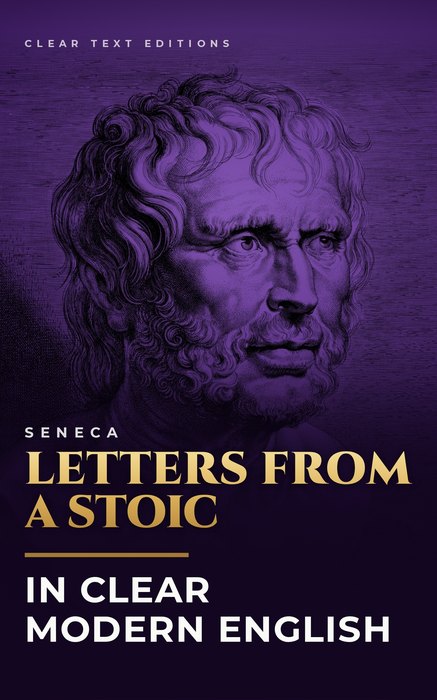
Seneca's Letters to Lucilius are teaching in the form of correspondence. There are 124 of them, arranged in 20 books, written in the last years of Seneca's life after he had withdrawn from Nero's court. Lucilius was a friend and an official in Sicily, and the letters lead him, step by step, from first principles toward harder questions. The early letters are short and often end with a saying, many of them from Epicurus, whom Seneca quotes freely. The later letters grow long and technical. Seneca also wrote essays, among them On Anger, On the Shortness of Life, On the Happy Life and On Providence, as well as tragedies and a work on natural science.
Epictetus wrote nothing. What we have are lecture notes taken by his student Arrian, who later became a Roman consul and historian. The Discourses survive in four books; ancient sources suggest there were more. The Handbook (Enchiridion) is Arrian's digest, 53 brief chapters. Epictetus speaks to young men who mean to go home and take up careers, and he is blunt, funny and impatient with students who want to talk about philosophy instead of practising it.
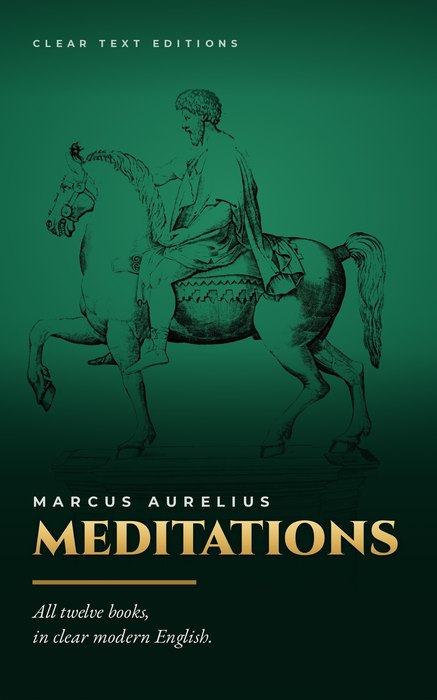
Marcus Aurelius's Meditations were not written for anyone else. The Greek manuscripts give them a title meaning "to himself." There are twelve books of entries, some a single line, some a page, much of it composed during the wars on the Danube in the 170s. The book was first printed in 1559, from a manuscript now lost.
How each asks to be read
The letters reward reading in order, at least at first. Seneca builds a course, and he refers back to earlier letters. A good opening run is Letter 1 on time, Letter 2 on reading a few authors well, Letter 7 on crowds, Letter 47 on slaves, and Letter 71 on the supreme good.
The Handbook can be read in an hour and reread for years. It is the closest thing the Roman Stoics left to a summary of method, and it opens, as the second lesson of this course showed, with the distinction between what is up to us and what is not.
The Meditations resist being read straight through. Marcus repeats himself, because he was rehearsing the same few truths against the same few temptations. Many readers find that Book 2 makes a better entrance than Book 1, which is a list of personal debts and makes most sense once you know the man. Books 4 and 5 hold many of the passages this course has used.
Translations
English readers meet all three through someone else's choices. Marcus wrote Greek, Arrian recorded Epictetus's teaching in Greek, and Seneca wrote Latin.
The Meditations were first published in English by Meric Casaubon in 1634. George Long's translation of 1862 became the standard Victorian version, with its "thee" and "thou." Later English versions include C. R. Haines's for the Loeb Classical Library (1916), Maxwell Staniforth's (1964) and Gregory Hays's (2002). Seneca's complete letters were translated by Richard Mott Gummere for the Loeb Classical Library (1917-1925), and a well-known Penguin selection by Robin Campbell appeared in 1969 as Letters from a Stoic. Epictetus was translated into English by Elizabeth Carter in 1758 and by W. A. Oldfather for the Loeb Classical Library (1925-1928).
When you choose a version, ask what it is: a translation from the Greek or Latin, a revision of an older translation, or a modern English rendering of an older translation. All three are legitimate. They are not the same thing, and an honest edition says which it is.
Ancient Stoicism and modern Stoicism
Much of what is now sold as Stoicism is a set of techniques for resilience, drawn mainly from Epictetus and Marcus and detached from the rest of the system. The detachment removes part of the ancient school's own justification. For the ancient Stoics the ethics rested on a theory of nature and the logos, and the goal was to become good.
Reading the texts themselves is the remedy. The letters, the recorded lectures and the private notes present the teaching in different forms, and the benefits they hold out depend on accepting demanding philosophical commitments. What they offer is a way of seeing, and the reasons for it, set down by people who were trying to live by it. That is the best reason to read them in full rather than in quotations.
Further reading: a guide to the twelve books of the Meditations is Meditations, Book by Book; the lines most often misquoted are on Meditations Quotes; and Long's English beside a modern rendering is on Meditations in Modern English.
Reading
- Seneca, Letters to Lucilius
- Meditations
- Epictetus, Handbook (Enchiridion)
- Moral Letters to Lucilius
Questions and answers
Where should I start with Stoicism?
A practical first order is a run of Seneca's Letters to Lucilius or Marcus Aurelius's Meditations, then the Handbook of Epictetus, 53 short chapters compiled by his student Arrian in the 2nd century AD, with the Meditations read slowly and returned to.
Should I read Seneca or Marcus Aurelius first?
Seneca's 124 Letters to Lucilius explain Stoic teaching more directly than Marcus Aurelius's Meditations, so they make the better first read for most beginners. The Meditations, written in Greek around AD 170-180, are private notes that assume the doctrine already.
How many letters did Seneca write to Lucilius?
Seneca's Moral Letters to Lucilius survive as 124 letters in 20 books, written around AD 62 to 65 after he withdrew from Nero's court. Seneca died in AD 65, ordered by Nero to take his own life, and later letters are known to have been lost.
Did Epictetus write the Discourses?
Epictetus (c. AD 50-135) did not write the Discourses: his student Arrian of Nicomedia recorded his lectures, of which four books survive, and condensed their teaching into the short Handbook (Enchiridion). No writings by Epictetus himself are known.